Media
Selected Coverage and Conversations
A curated selection of press coverage, reviews, video features, and broadcast interviews with Jerrianne Hayslett — most drawn from the reception of Valiant Vel.
From the Archive
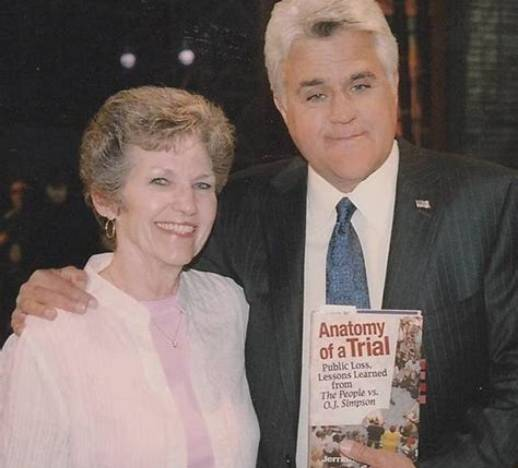
A Late-Night Moment With Anatomy of a Trial
Jerrianne with Jay Leno, holding a copy of Anatomy of a Trial: Public Loss, Lessons Learned from The People vs. O.J. Simpson — a reminder of how far the conversation about cameras, courts, and the press reached beyond the courthouse.
Media Coverage
Newspaper Features, Reviews, and Publisher News
Milwaukee Journal Sentinel
‘Valiant Vel’ recounts how courageous Vel Phillips persisted in advocating fair housing
By Jim Higgins
“Hayslett details the persistence and courage that Phillips displayed in continuing to press her case.”
Shepherd Express
Vel Phillips’ Fight for Civil Rights
By David Luhrssen · February 12, 2025
“The new illustrated biography … chronicles the achievements of a civil rights leader who opened many doors.”
Interviews & Broadcast Appearances
Conversations on Television and Radio
WUWM 89.7 FM
Lake Effect
“I wanted to write a book about who [Vel Phillips] was.”
Interview on the person behind Phillips’s public achievements.
TMJ4
The Morning Blend
Television conversation about Valiant Vel and Vel Phillips’s legacy.
Wisconsin Public Radio
Wisconsin Today
Statewide radio interview with Jerrianne Hayslett.
Milwaukee Independent
In Conversation with Jerrianne Hayslett
A seven-part conversation with Milwaukee Independent, tracing Jerrianne’s path from small-town faith and early journalism through Iran on the eve of revolution, the O.J. Simpson trial press corps, and her love for — and questions about — Milwaukee.
Now playing: Segment 01 — Faith, Trails, and a Personal Path to Journalism
Segment 01
Faith, Trails, and a Personal Path to Journalism
How a rural upbringing and an unlikely first newsroom job set her course.
Read the transcript
Auto-generated captions, lightly grouped into paragraphs. Click a timestamp to play that moment in the player above.
the fondest memory of my youth was the Christmas time the department store Santa Claus the big one in the area where I grew up Richmond Virginia was called Miller and Rhodes the store that no longer exists huge beautiful display the money and the real Santa Claus was there truly my fondest memories and I think a person who influenced my life more than anybody else what's the times that I spent with my dad my father loved baseball and I think that because of that I love baseball too I would follow the baseball standings in the newspaper Mickey Mantle was my hero
he had the best batting average my dad would take me to the farm team games the Yankees had a farm team in Richmond and he would tell was also a member of the Lions Club and he would take me to breakfast that the Lions Club held hosting the Yankee baseball team when it traveled north after spring spring training so I helped him outside he had a huge huge garden we had about four acres that he grew gardens and I vege Tibbles and that my mom canned and froze I helped him in the garden my sister's folks my mother in the kitchen but now my times with my dad and even though he
really wasn't educated beyond high school other than to get accounting training he was really a philosopher and he would have all of us kids there were five of us sit at the Sunday table Sunday dinner table our dinner was in the middle of the day after church and we sit there and discuss things until sometimes 3:00 and 4:00 in the afternoon and he encouraged us all to express our opinions and he expressed his if I could send a message back to a younger version of myself I think I would say pay attention take take life a little bit more seriously than I did and don't
worry so much about what other people think about you be your own person have some goals strive towards them there have been a number of things that have happened in my life I don't like the word proud but I don't know of any other way I just feel good and satisfied about one is going back to college after our experience and living in Iran we were so Information deprived in Iran a number of things occurred that I think we would have done conducted our lives differently had we known and it was simply because we did not know and the
it was really an epiphany of the people's right to know I understood that and I went back to college I had quit college when I was much younger to get married and when I went back I got a journalism degree and started on my journalism career and this is certainly one of my greatest achievements of being married to my husband for now 56 plus years learning from him generosity selflessness and [Music] giving people space to be themselves one of the greatest lessons I think I've learned and I'm still learning is to
understand others the universe is not all inside my head and what I think in my experiences my early years was certainly grounded in religion my parents were lifelong Methodists as were their parents both my father's parents and my mother's parents so my childhood was going to church Sunday school Vacation Bible School and you know I learned all or heard all of the the biblical scriptures and teachings as I have grown I excel more separated from in the institutionalized type of religion and but very much grounded in
the moral teachings what's right and wrong everybody deserves to be treated well and I think the greatest lesson though I sure fall short all the time it's the Golden Rule and we should all we should all go live by the golden rule I think if we did awful lot of conflict would be avoided in this world when I left the world of journalism in the traditional sense I was at that time editor of a midsize daily newspaper and began working for the Los Angeles Superior Court my job was a director of public
information it was a position that the court had never had before so I was pioneer as such almost immediately was taken aback by a number of things number one was the animosity that judges and court staff have for the news media they see the news media as being aggressive overbearing sticking their noses into certain businesses not just not theirs and then with the news media and I came from that world how inaccurate so many of their reports were after I've been with the court for some time and I spoke at a statewide symposium and was covered
by a legal newspaper and I read the story I couldn't believe I just could not believe the errors that were in that story and I counted a total of 25 and this was in maybe a half hour presentation and I called the reporter and he said well that's what my note said and I said that's not what my tape recorder said because I had learned to tape myself when I spoke publicly so yeah that without it was dismaying in a way and I looked back did I do that as a journalist did I make those kinds of mistakes - you know I could only hope not but and I think the biggest lesson I learned in working with the court as a
liaison with the news media was that the court in the news media can work cooperatively and not compromise their ideals which are really grounded in the sixth amendment the judges strive towards that by giving defendants a fair trial and and I should say for the most part and the news media grounding in the First Amendment they're the guaranteed rights of the press and free speech and they come into conflict and cause such terrible clashes and I don't think that's really necessary that was one of my
it turned out to be one of my goals during my I don't know 11 or 12 years with the court was to try to find a way that they could work cooperatively and not have these clashes generally when the news media are are pinned to the wall and they end up filing a suit against the court for access believe it or not in the news media almost always win and there are case citations proving that the Riverside press-enterprise a newspaper I work for has two groundbreaking and long-standing precedents in the the news media's right or the presses right to cover
preliminary hearings before the press enterprise challenged the court on that in court the they did not have that was not a given that they would have a right to cover preliminary hearings and criminal cases in the second case that was really groundbreaking and stands as precedent is the press is right to cover jury selection prior to that there was no nothing in the law that said yes this media you do have a constitutional right to cover jury selection in both criminal and civil cases
Segment 02
The O.J. Simpson Case and the War on Drugs
Inside the courthouse during the most scrutinized trial in modern American history.
Read the transcript
Auto-generated captions, lightly grouped into paragraphs. Click a timestamp to play that moment in the player above.
in my mind and we all come from different perspectives but having been a part of the OJ Simpson trial and I do not mean as a participant in the courtroom when I was in the courtroom every day of that trial the criminal trial and the civil trial the criminal trial was in 1994 and 95 and then the civil trial was in 1997 but in the criminal trial which was certainly the most heavily covered by the news media what really escaped and I think was distorted so much for for the public was who the presiding judge really was what
his intentions were his name was Lance Ito and he became a caricature the news media turned him into the the la-la-land judge and I say they turned him into that because that is not what he was he was a serious deliberative jurist he was selected specifically to preside over that case because of his depth of knowledge of the law and even-handed UNMISS in which he applied that in his courtroom and what the public saw on their TV screens and what was going on in the courtroom were two different things I think the long-term impact of the OJ Simpson trial was really the trivialization and in
presentation for entertainment of really serious legal cases in which quite often life and death was at stake or certainly life and death was the issue of the case this is something I tried to point out in a book that I wrote was published years later in 2008 about the effect that news coverage of that case had on public perception and the and the news media's treatment of cases like that I really believe the public was the loser but I have to say I am a strong and ardent supporter of cameras in the courtroom
sounds like a contradiction doesn't it and I'm glad to explain to anybody my rationale I go back to my grounding as a journalist and that is the people's right to know that people do have a right to know what is going on in a courtroom the courtrooms belong to the public yes judges are the referees and they call the shots and it is certainly up to judges to maintain decorum and to ensure that all parties have a fair trial as possible the public needs to see that unfortunately the manner in which the
majority of cases are covered and the majority of the states allow camera coverage or not in courtrooms enables the news media to present something other than what is happening in the courtroom and the reason there's a there's a big reason they want to do that and that is because they want people to watch them ratings are paramount for the news media and they have to make them entertaining so people will watch the vast majority of people have no idea how laborious and boring the court cases court proceedings really
are full of legal terms and motions and kind of sidetracking sidebar conferences and so forth all of that has to be edited out or interpreted in such a way that number one people can understand but number two that they really want to stay tuned to it very few people know that the state of Florida not only allows cameras the news media have a right to cover court cases with cameras and it to me they do it the right way the camera is there as just another set of eyes the media don't control the
camera and and that's what I think would be ideal for every courtroom that every courtroom is equipped with a stationary camera maybe mounted on a wall that gets the entirety of the well of the courtroom that is the part that's inside the rail where the attorneys the defendants and the court clerk the court reporter sit and then the bench where the judge sits and it's a static shot the camera does not soom it doesn't pan it's just a static shot and the footage be made available to the news media and they can edit that footage any way they
want to but they can't become so creative that they that they edit in drama where drama doesn't exist and that's the way I think a camera should cover court cases there certainly are times when the cameras either should not be rolling or when a certain thing should be blurred or blocked out and we're talking about when there are children minors who are witnesses or for whatever reason would be in a shot and undercover law enforcement people the things of that nature there are certainly times in which there should be measures taken but that doesn't mean you just don't allow cameras in the courtroom at all so that that's why I think cameras should be
there but they should be managed properly by my definition and and I really think that would go a long way to help inform the public but on the other hand not let the media be in control of what they want the public to see the book I wrote that was published in 2008 anatomy of a trial public loss lessons learned from the People vs OJ Simpson was very well received so far as reviews are concerned almost all of the reviews were very favorable and they were done by members of the media court officials judges law associations and as well as
just the general people who review books and on a personal basis people I talked to also for the most part had a very favorable take on it some people a couple of folks who are in the court media news business other court information officers a couple of judges thought that I was being an Ito apologist I can't change their their perception but that's an honest answer for the most part people are were amazed they had no idea that some of the things occurred that did occur or why some of
the things occurred as they did I just think that this so-called war on drugs was really a war on people of color the the court cases for almost all black people and to a lesser extent Hispanic or Latinos and part of that I think is because of the laws that were applied differently for the types of drugs that were used and sold by people who lived in the inner city
versus people who lived in the suburbs ie black versus white affluent crack cocaine had far harsher sentences than powdered cocaine and I could see I could just see the difference in the way defendants were charged and sentenced in those cases I just think this war on drugs was what's just an abomination all the way around and to charge people free for possession or use there's no violence there's no infringing on other people no
assaults nothing except what they're doing to themselves and of course by extension to their families but to me treatment is the way to go with that we have the location in a way that negates people's need not only to use but to use use drugs as a means of income poverty I think really lies at the base of the majority of the drug problems in this country leading up to what is now an opioid epidemic I don't know that that can be included but certainly in the 80s and 90s just in
abysmal failure as far as I'm concerned
Segment 03
Judge Lance Ito
Working alongside the judge at the center of the storm.
Read the transcript
Auto-generated captions, lightly grouped into paragraphs. Click a timestamp to play that moment in the player above.
do people care about the facts once they've seen the sensational presentation of a trial such as the Simpson trial it's very difficult to change people's perception I'll tell you a story about a judge in Arizona who at one time was the Chief Justice of the Supreme Court he had retired when I met him he spoke to a conference of court information officers and he was talking about NBC I believe was the network wanting to do a story on jurors and a jury wanted to follow a jury from selection all the way through
deliberations deliberations are done in private they're confidential no one sits in on jury deliberations so this judge I think really wanted to allow this to happen but he said I would make sure that the judge was not a Lance Ito and I was surprised to hear him say that not because judge Ito didn't have a public image at that point of not having handled that trial well but that a judge number one would have that perception when the judge had never been in the courtroom had never read the transcript
had never talked to the presiding judge in that case Lance Ito his total perception was formed by what he saw on television what he read in print so I asked him after the his remarks we had a break and I asked him why he said that and he said well because you know he just completely lost control how he formed his opinion on that little book on TV you could see it right there hirtius and I asked him specific questions about in what way he thought judge Ito had lost control or did not manage the trial well he pointed out a couple of examples the the lawyers
grandstanding for instance on the steps of the courthouse pontificating to the news media either after the court was over or during lunch recesses about their case and so forth and I said what would you have done and he said I would have had those lawyers and my chambers so fast their heads would have spun and I said well judge Ito did and he said really he says well I tell you I were to find him I would have sanctioned done that I said judge Ito did in fact the Simpson trial the criminal trial was the most heavily fined trial and with regard to the lawyers of any in the state's history up to that point oh well I didn't know that and so many of the things that he pointed out I said well
judge Ito did that and he said oh well I didn't know that and it turned out that all he knew was what he saw on television it was not what the facts were and afterwards after our conversation he says well I still think he did a bad job I mean he just was not going to accept anything other than what he saw on TV as being fact and I thought well if someone who was a Supreme Court justice in the state can't be convinced I guess nobody can I have had an awful lot of people say to me after reading the book that they were they were surprised gave him a different view of things it gave them a more favorable impression of judge Ito
but I universally there's no way to change that public image that he now labors under and I say he labors under if I may I would to say a couple of words about how judge Ito has responded to all of the criticism and the public reaction to him presiding over that trial first he never gave any public interviews after the trial was over he unfortunately did do an interview very early in the proceedings it was before jury selection had even begun and the interview was to focus on the an exhibit at the Japanese Historical Museum in Los Angeles and the
exhibit was the recreation of heart mountain Wyoming Japanese internment camp during World War two and judging of the people who became judge you as parents met there they were both interned in that camp and he had very strong feelings about the treatment of people with of Japanese heritage during World War two so he was really torn about whether or not he should he was asked to do an interview by a CBS affiliate news reporter and he asked me my opinion I said don't do it no matter what you say no matter what you do you lose control
once the interview is over and you have no idea how it will be used and his good intentions unfortunately overcame my advice he has always said that that was the biggest mistake he's made in that trial was not listening to me and about that but he did do the interview and yes it was construed he was criticized he was ridiculed that the interview was not supposed to touch on the trial and the case in any way and the editors were just really creative you know and they did make it a very entertaining thing and they stretched it over six days they made it a six part series which was it and he
put up a lot of conditions that a one time interview to air late night and at the 11 o'clock broadcast and not repeated and they violated everything so but after I think he really did learn from that and after the trial he did not give any interviews to anyone he did not speak publicly anywhere he did not write a book he did not capitalize in any way on the trial everybody else I know of involved in that trial at least wrote a book and some made a lot of money others did not he just wanted to continue doing what he thought was his mission in life
and that was to be a judge and to be as fair and as good a judge as he could many people very few people know this that he continued to allow cameras in his courtroom after all other judges practically in the state would not allow cameras in their courtrooms after that trial and but he did he thought they had a right to be there
Segment 04
News Media and the Courtroom Ratings Game
What televised justice did to the press, the public, and the courts.
Read the transcript
Auto-generated captions, lightly grouped into paragraphs. Click a timestamp to play that moment in the player above.
I don't think past courtroom dramas paved the way for today's infotainment approach that the news media have taken and was particularly evident in the 2016 political campaigns I'm not saying they had no effect at all but I believe the way to today's infotainment was paved a long time ago Reagan's abolishing the fair doctrine in the 80s that really required a balanced approach of coverage
and but more important to me in my mind is requiring the news media or putting the news media into the ratings game at one point the news was considered a lost leader back in the good old waffle Walter Cronkite days yes more people watched Walter Cronkite on CBS than they did other Network News and maybe that was a factor in deciding that the news had to carry its own as far as ratings were concerned but as soon as ratings became paramount and and of course ratings translates to profits so the the
profit motive of media companies to [Music] include news coverage I really think has led to what we see presentative news these days another factor is the consolidation of news organizations in the good old days there were family-owned and station's family-owned chains of newspapers that also then got into the TV business and as those chains and newspapers have been bought up by
ever larger corporations and now our owned by just a just a half dozen corporations that have nothing to do with journalism these corporations are interested in profits and returning dividends to their shareholders they are not interested in journalism good hard solid factual journalism and as that has diminished and seems to be meeting its demise I think the public has is really suffering and as is our whole demography I sound like I'm really on a big platform but I really think it's all tied together and I think we have we
have seen and continue to see that in our political world particularly with regard to coverage of presidential elections and presidential administrations people have difficulty in fact find it impossible to separate fact from fiction insofar as what's presented in the way of news because people for the most part believe what they're told and that goes way way way back to why propaganda has always worked I think maybe the biggest example I can think of at the moment is North Korea
North Korea the people the North Koreans truly believe that their leader is supreme can do anything can do no wrong is God and that their supreme leader alone can keep them safe and secure the rest of the world is dangerous and evil and they believe it why do they believe it because they that is what they are told that is their sole source of information and that's why I find people who rely on a single source of
information in this country dangerous people who watch only one news channel for instance and there is one news channel that is viewed by the vast majority of people who consume TV news yet it has been shown over and over and over again that more than 50% of their news reports contain factual inaccuracies and sometimes this flat-out are wrong and yet they continue to repeat repeat repeat and so people believe it why do nonprofits fall short especially when there's so much good
news going on and yet people see only bad news when they turn on their TVs because I think nonprofits have not caught on to how to convey the message how to communicate in an effective way that people will believe and part of that is repeating repeating repeating who was who was it who coined the term tell a lie often enough and it becomes truth and there people who have a mess whether it's for profit or political benefit know that have learned that and they repeat it they repeat it nonprofits
have to find a mechanism and unfortunately one that doesn't cost a lot of money just and just repeat repeat repeat their message and they have to find a way to reach a wider audience
Segment 05
Iran in 1978 and the Coming Revolution
Reporting and living abroad as a country changed overnight.
Read the transcript
Auto-generated captions, lightly grouped into paragraphs. Click a timestamp to play that moment in the player above.
my husband was in the US Air Force and one of his assignments was Tehran Iran and we stood there as a family we could take all of our household goods and car which was a little bit unusual for a foreign assignment so we did and we got there I think just prior to the advent of the real upheaval that became the Islamic Revolution we arrived there in the middle of 1978 to me it was such we had lived in other countries we visited other countries we had a lot of experiences under our belts at that point but this to me seemed different and I for the first time in my life began to keep a journal that journal
became a page one a cover story actually for a magazine and so a lot of people got to read what it was like on a daily basis as that country really devolved into what became the Islamic Revolution my greatest memory of all that was the lack of information good solid information when we arrived there were english-language newspapers there was an english-language television station and we thought we were keeping up on the news but as things began to deteriorate there was rioting and there were
killings fires the Shah I think I know felt like he was losing grip and so he tightened his grip and english-language newspapers were shut down the english-language television station began to play nothing but classical music and the image was a photograph of the Shah is splendid in his military uniform and the only real information we got ironically was very late at night usually at midnight we could tune in on our little radio Radio Moscow
it had an english-language broadcast that was it otherwise the US Embassy and military command in Tehran issued on an infrequent or random basis things that were labeled info grams and they were one sheet papers that kind of listed things that they thought were of importance to the Americans who were living in Iran the the curfew hours the rationing of gasoline and bottled gas when gas stations would be open riots that had occurred where that occurred
this was always after the fact precautions that we should be taking and we were just starved to know what was really going on and it had a profound impact on us we as a family certainly drew closer together we're all we had our little nuclear family we had some neighbors who were also Americans either working for defense contractors or corporations such as Bell Helicopter and who were also in the US military but we were all kind of cut off we felt it was unsafe to go outside one of the security precautions we took was if anyone knocked on our apartment door one of our
children older children would answer it because we knew that no Iranian no matter what their intentions would harm a child not deliberately so yeah we became very insular and cut off from the world so that lack of information returning to the United States and my children and I returned without my husband we were evacuated among the last American dependents to be evacuated from that country and we were shipped out on a cargo plane if anybody has any idea what it's like to sit with your kids in a cargo plane it's not pleasant but returning to the to this country and
realizing if we had better information we would not have been caught up in the terrible throws that occurred and I say we I mean my children and I because my husband was assigned there that was his duty to be there and but when we left we left everything we had five suitcases three kids me and five suitcases and everything else all of our furniture which okay furniture can replace our furniture was custom-made teak furniture yes in an assignment Taiwan and yes it was just material things and it turned out of course to be in material when it came to the real what's really important in life by our car our appliances
everything and then of course we left my husband my kids father there not knowing when he would leave he was told he was going to have to complete his two-year assignment which was well over a year probably about eighteen months to go and so we were plunged into a black hole we didn't know where to go we didn't have any money we didn't have a home we didn't have anything we were very fortunate and that we connected up with some friends in Michigan where we had lived before we went to Iran and we actually house sat for a couple who went to Florida for the winter so but I was just completely committed to the idea of people really do have a
right to know and that sent me back to college to complete my degree I graduated with a degree in communications and journalism at a newspaper career which led to my tenure with the LA Superior Court and then after that as an International Court media relations person consultant who got to go to many countries all over the world and it led to an exciting life
Segment 06
Remembering When Iran and America Were Friends
A first-hand account of a vanished moment between two nations.
Read the transcript
Auto-generated captions, lightly grouped into paragraphs. Click a timestamp to play that moment in the player above.
so I've been asked you know what about the culture shock when I came back to got back to the US and I didn't feel there was that much culture shock and when I came back to however my kids and I were definitely in shock over what we had experienced what we had gone through and the fact that we were kind of plunged in the middle of sofas no home no nothing no husband and thankfully my husband was evacuated about two months later and he did eventually return home safely after debriefing in Germany and then a stent at the Pentagon for a short while he returned to us we were living in Michigan at that time and moved on to
his next duty station the the reaction I get from people when I say it that we were in Iran during the Islamic Revolution was oh wow and that's pretty much it not even like what was that like which is okay I certainly don't need to go into it every time because once we get started it's hard to stop I think one of the most disappointing reactions so far as I'm concerned was the military community particularly the spouses of high-ranking officers I really was ostracized and pretty much made persona non grata on the military base I was
close to because I had spoken out and said that I felt like the military had not been forthright with us and told us and in fact really used the dependence is sort of a upon to negotiating chip to try to extend and the diplomatic efforts that were underway to try to keep the embassy vital and the diplomatic mission of the u.s. vital in that country some time after my husband had returned to the states and we were living in Southern California that was his next
duty station with Riverside Air Force Base in Riverside California the u.s. embassy was overrun and in fact people not many people know it was overrun for the second time it was a it was invaded shortly after the revolution got underway but it was relatively short-lived the second invasion of the u.s. embassy by the revolutionaries occurred in late 1979 and it was just disbelief and dismay that such a thing could happen because US embassies are considered their separate their just sacred so sacrosanct did it
it's like invading the country that of the embassy so it was almost like an invasion of the United States when the revolutionaries over ran the embassy and took the hostages I don't know that I knew any of the people who were held hostage personally my husband did because they were almost all either related to the military somehow or in the diplomatic mission but one of the hostages I did and he was the superintendent of Tehran American school and I worked at the care on American school as MA in the media center and the when the superintendent was listed as a
hostage I was almost shell-shocked because I had understood that he was on that he had gone to Pakistan and he was trying to kind of regroup there were so many teachers faculty members and so forth whose records in schools children whose school records were still in Tehran and without them they were kind of stuck and not being able to get back into schools or get new jobs and he apparently had gone back to Tehran and was in the embassy the day that it was overrun and he just happened to be among the hostages who taken so I of course followed the drama of that every day years after the hostage event they had all been released
and in fact the superinten and I who was superintendent schools and incidentally got caught up there he in fact had died he was the first of the hostages to die after they were released so a movie was made years later called Argo and it was about the Canadian diplomatic corps the Canadian Embassy and its role in the hostage crisis and I don't know had kind of mixed feelings about whether or not I wanted to see the movie because so often movies do not accurately depict an actual event you can even take and I base that I guess more on books that I
read novels and so forth that then are turned into movies and I really disliked seeing the movies because I said no that's not how it was in the book so I was really concerned that it would not be an accurate portrayal and would further disseminate misinformation but I did go eventually and I'm really I think I'm really too close to everything to be objective but I felt like it was a pretty good portrayal I was not aware of the Canadian embassies role in freeing or helping people get out of Iran but the depiction
of everything seemed to be pretty right on insofar as people's reaction to things so there was one theme that I thought oh my gosh this absolutely never happened there was an obviously Western woman had blond hair and blue eyes fair skin and she was running through the bazaar she was looking for something I don't remember the exact situation but she was in the bazaar the bazaar is in a very very deep in the inner city of of Iran and the women are even when I was there the women were shedders which is the black body in here had concealing robe or garment at the very very least women wore headscarf here she is with
nothing on her flowing blood and nobody's saying or doing anything and at that point the the Revolutionary police were very very much in force and they stopped anybody and everybody for anything they thought violated the Islamic faith and traditions and tenants and I thought that would never have happened but that was about the only thing that did not seem really accurate if I could tell the people of Milwaukee what Iranian czar like from my experience in living in Iran I just I just would really want Milwaukeeans to
know how friendly and hospitable they are they loved children they loved life they want for their families the same thing that we all work for our families you know well being a sense of security and happiness and I have lived since my time in Iran with the hope that eventually relations particularly in the two countries the government's could normalize to the point that we could once again get to know each other as people
I remain friends with a couple my husband and I both remain friends with a couple that we met in Milwaukee he was on faculty at one of the universities here and he was and his wife were forced to return to Iran and we really blackmailed into returning to Iran which they very much did not want to have to do but the safety and well-being of some of their family members was a state so we remain in contact and their wish is the same as ours we want very much for people to know the people of our countries we want very much to be able to get together again we were such good
friends while they were here and I have glimmers of hope there was what did they call it the Green Revolution and I really thought this is it but the country is still at the mercy of the religious theocracy the ayatollahs really do call the shots I had another real glimmer of hope during past administration's agreement with Iran that they would stop their nuclear weapons development and I really thought this this is a step in the right direction let's keep it going so things have taken a different turn and if you never say never we we do hold out hope that eventually the Iranian
people and the American people can become friends again
Segment 07
Loving Milwaukee but Bewildered by Its Segregation
The city that drew her back — and the divisions that shaped Valiant Vel.
Read the transcript
Auto-generated captions, lightly grouped into paragraphs. Click a timestamp to play that moment in the player above.
considering all the travel that my husband and I have done the places that we've lived the most recent before moving to the Milwaukee area was Southern California so people say what are you crazy you left Southern California for Milwaukee and and I say no grazie we love it here I have to admit we have liked every place we've lived we liked living in Iran we were really really distressed at the circumstances as they developed but we really loved Iran how do we end up here well my husband had retired and our daughter had met and
married a man from South Milwaukee or who lived in South Milwaukee and so we began to visit and Milwaukee's not a bad place we kind of were surprised because Milwaukee does not have the reputation it deserves and reputation it deserves is this is a nice place and a great place to raise kids and my daughter and her husband had one they had a baby and my husband who was retired I hadn't retired at that point or resigned started visiting because he really liked that baby and he went to spend time with him so finally he was spending so much time in Milwaukee I said I'll just I'll just quit my job and we'll move there which is what we did and we've not been sorry and I think the biggest shock to
me was that Milwaukee is a segregated as it is that I just I had no idea after we were here for a while and we bought a house in South Milwaukee maybe because that's where my daughter and her husband lived and we would go to events and even things like Brewers baseball games with the go-to and say to my daughter we're off black people and my daughter says mom melody is the most segregated city in the country I was shocked I'm from the Richmond area in the state of Virginia I grew up in segregation I
know what segregation is and I was just shocked and so I think I've been on a learning mission ever since one of the greatest things we did after we moved here was to become familiar with America's black Holocaust Museum which is it at sixth and Norris I think was where it was located my husband we joined and you know so meaning we donated money and my husband became a griot and led groups of people through the museum and we had the greatest teacher in the world Reggie Jackson who was very active in the social justice and civil rights movements in Milwaukee
and yeah they truly it became our family it embraces welcomed us introduced us to people we would never ever have gotten to know otherwise people we continue to love to this day and who continue to accept us which has just been wonderful for us my hopeful Milwaukee is that all of the Waukee can become that way there are divisions you know long long long term racial issues the redlining the just all of the Jim Crow things kind of all packed up balled up and packed into what has become the inner city of
Milwaukee and but I think hope lies and people like Reggie Jackson America's black Holocaust which is reopening it closed for several years because it ran out of funding and has new life and it's going to be a bricks and mortar Museum again it doesn't maintain a virtual presence of the website maintained beautifully by fran Kaplan but getting that use them up and going again and getting people into that museum so they can understand just understand the african-american experience and that will help african-americans also understand the white experience because as dr. James Cameron who is the founder
of that museum always said it is a two-way street when I think of segregation I think of segregation in in conjunction with an emotion and that emotion is fear of segregation by itself is is part of something to me far larger and that is people's people not wanting to be around not wanting to mix with not wanting to acknowledge not wanting to be part of people who are not like them so we as white people and I even hate the term
white people because I'm not white neither is anybody else I've ever seen is so taking their calling myself a European American everybody else is hyphenated why shouldn't we be but segregationist is part of this human emotion or reaction and it's called fear people are afraid of what they don't know what they've been told to be afraid of and what might expose their inadequacies or their feelings of inadequacy back in the plantation days the white plantation owners really kept
the people they enslaved down they were punished if not killed they even learned to read why was that - because they were afraid of them they were afraid of what their prisoners the people they enslaved would do if they could read if they knew things if they could communicate with each other they were certainly they're just like prisons these days the prison is far outnumbered the the people who imprisoned them so the plantation owners had to and those who enslaved people had to control them some way so they
controlled them by keeping them ignorant and isolated and also with physical punishment and and I just think that's perpetuated worldwide the segregation in Milwaukee these days fear I know people in the suburb where I live who would never not go into Milwaukee aren't you afraid no I'm not afraid there's nothing to be afraid of in in terms of women the white males of this world feel so threatened and feel so sir full of women gaining power influence control equality
because not that they are afraid of the women but they're afraid of what they'll lose white people are afraid of what they'll lose if people of color move into positions of dominance and control and so they need to if there's a definite need they need to prevent that from happening so they the white people will not lose what they have their privilege their status their elitism and oh yeah we've got it I know we do I think in these days of such a fractured country with people just so completely
split down the middle not even able to talk to each other to converse with each other and I'm one of them you know fine I mean I'm surrounded by people I know have a different different point of political point of view than I do vote for different people and different parties than I do but I love these people I get along with them very well how do I do that we were talking about politics we just don't go there and it works for us for now but does it work overall I don't think so I really if people would ask me why I believe what I do politically sital
philosophically spiritually and if I would have the courage to ask them the same thing it's a way to bridge and that's what we need riches we don't need walls you need bridges so I think at this point the number one question I wish people would ask me is why do you think and act and believe what you do
Video Features
Interviews and News Segments on Screen
Milwaukee Independent
From Iranian Revolution to the 24-hour news cycle
A 2017 video interview on faith, journalism, and the evolution of the news industry.
CBS 58
'Valiant Vel' at the Bronzeville Center of the Arts
News coverage of a Black History Month book signing and discussion in Milwaukee.
Praise & Endorsements
What Readers, Reviewers, and Educators Are Saying
Editorial reviews, educator feedback, librarian endorsements, and media quotes.
Editorial Reviews
“Hayslett details the persistence and courage that Phillips displayed in continuing to press her case.”
Jim Higgins, Milwaukee Journal Sentinel Valiant Vel
“The new illustrated biography … chronicles the achievements of a civil rights leader who opened many doors.”
David Luhrssen, Shepherd Express Valiant Vel
For Editors & Producers
Media Inquiries
Bios, book fact sheets, awards, high-resolution images, and interview topics are gathered on the media kit page, with a downloadable PDF version.
Note: Some VPNs or corporate networks may block links to third-party sites such as LinkedIn. If a social link does not open, use the copy button beside the LinkedIn icon and paste the URL directly into your browser’s address bar.